2026

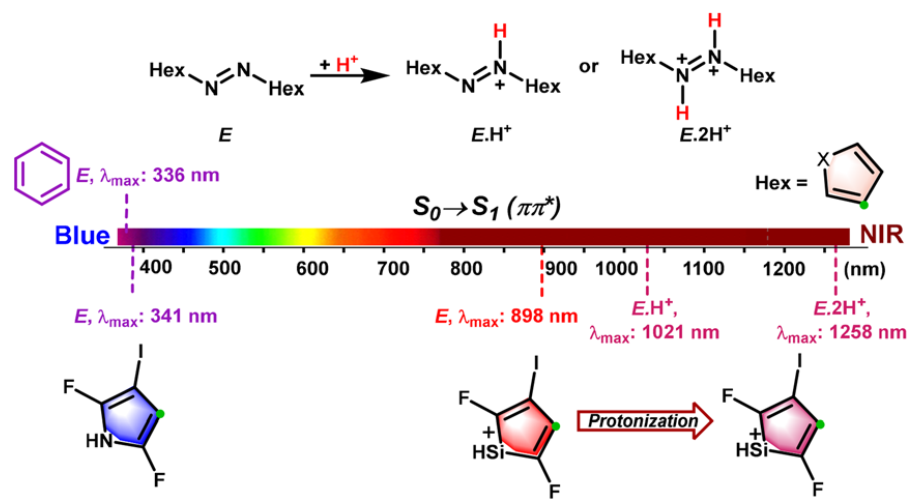
Probing the longest λmax of azo compounds in near infrared absorption via integrating protonation, antiaromaticity and substituents: a combined DFT and machine learning study

The photoisomerism of azo switches using light in the near-IR region (NIR, 780-1400 nm) is highly preferable for the applications to biomedical and pharmacological fields. The common chemical modifications of azobenzene only enables the E ⇆ Z photoswitching wavelengths of azobenzene derivatives close to the red limit of near-infrared light.

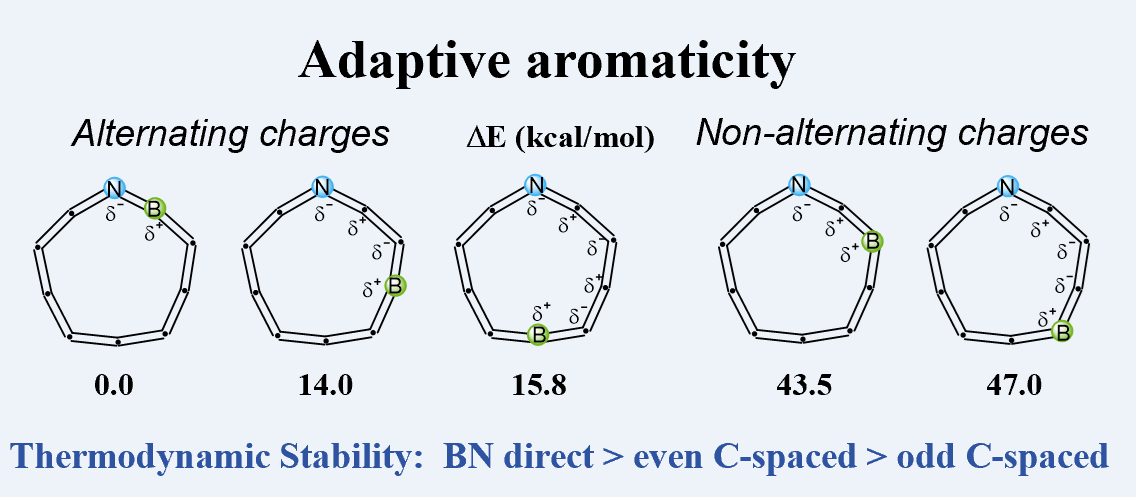
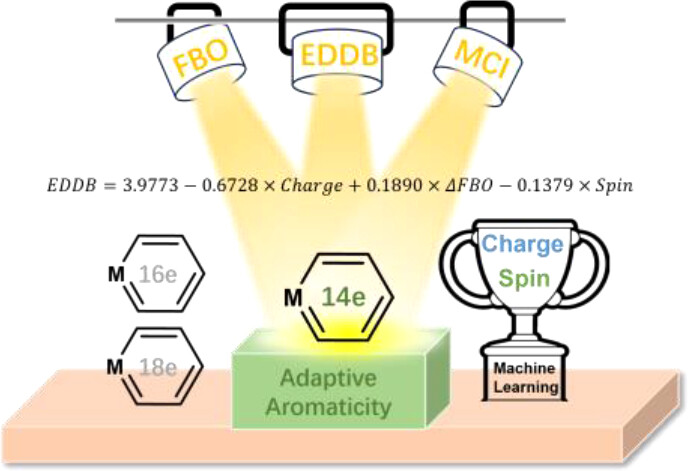
Charge-Promoted Adaptive Aromaticity in Metallabenzenes: A Combined DFT and Machine Learning Study

In accordance with the constraints by Hückel’s and Baird’s rules, species generally exhibit aromaticity in one state (the lowest singlet state S0 or the lowest triplet state T1). Consequently, species with adaptive aromaticity (being aromatic in both the S0 and T1 states) are particularly rare. In this study, density functional theory (DFT) was employed to investigate adaptive aromaticity in 14e–, 16e– and 18e– metallabenzenes.

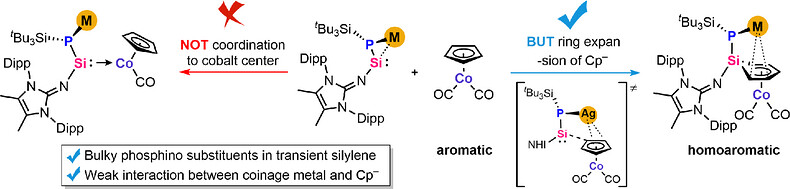
Switchable Reactivities of Metalated Phosphasilenes Regulated by Reversible 1,2-Metal Migration

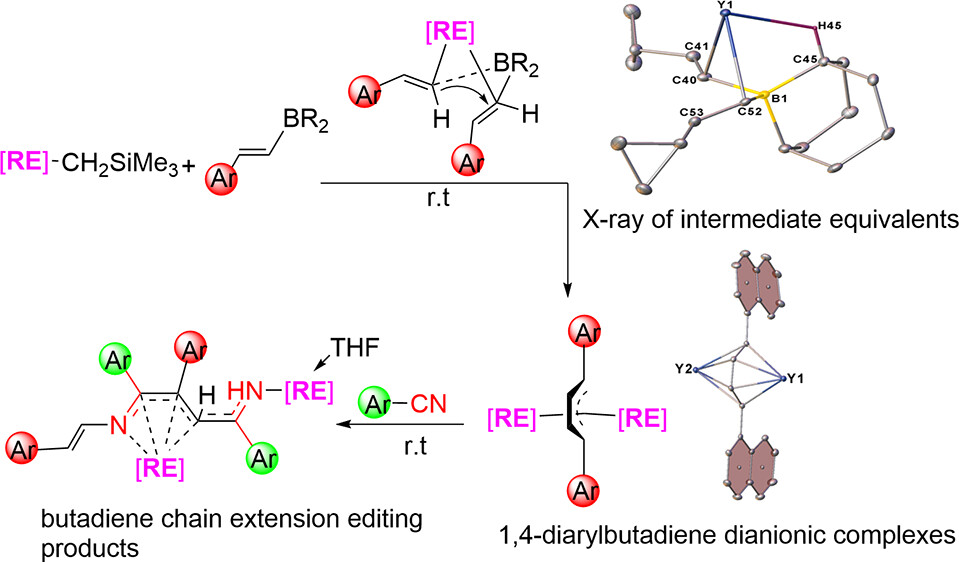
Anionic reagents with silicon-containing double bonds, M(R)Si═ERn (E = main group elements), have garnered significant interest owing to their unique metal-mediated reactivity and their potential in transferring the Si═E unit. Within this domain, the intriguing field of Si-metalated phosphasilenes remains uncharted.

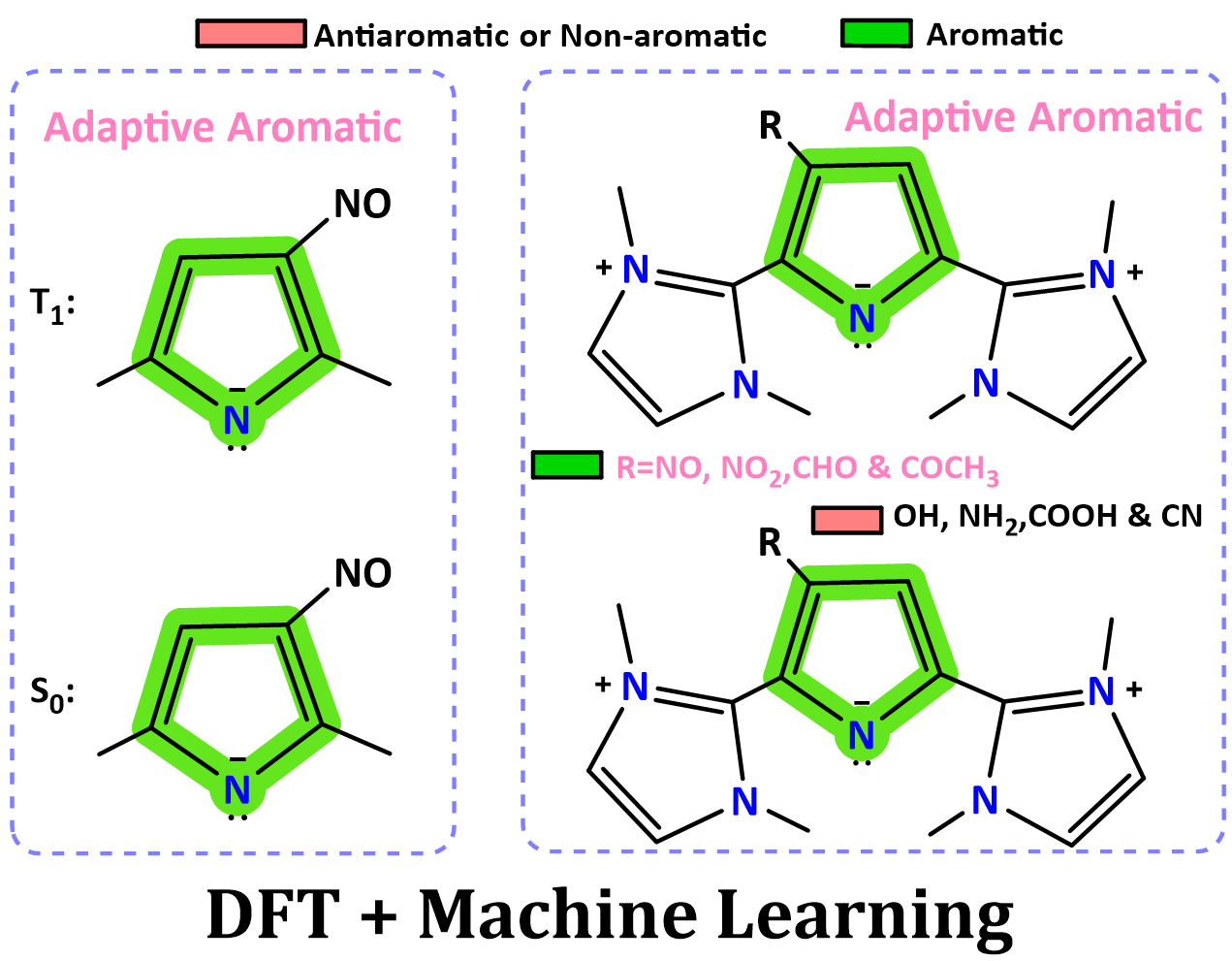
"Sacrificial reagent" strategy for tailoring adaptive aromaticity in pyrrole rings with its application to singlet fission: a combined DFT and machine learning study

Adaptive aromaticity has attracted substantial attention due to its unconventional two-state aromaticity in both the lowest singlet state (S0) and the lowest triplet state (T1) and its application to the singlet fission. Here we carry out a comprehensive investigation on a series of pyrrole derivatives by density functional theory (DFT) calculations and machine learning.